Hyattsville, Maryland
Washer Repair in Hyattsville, MD
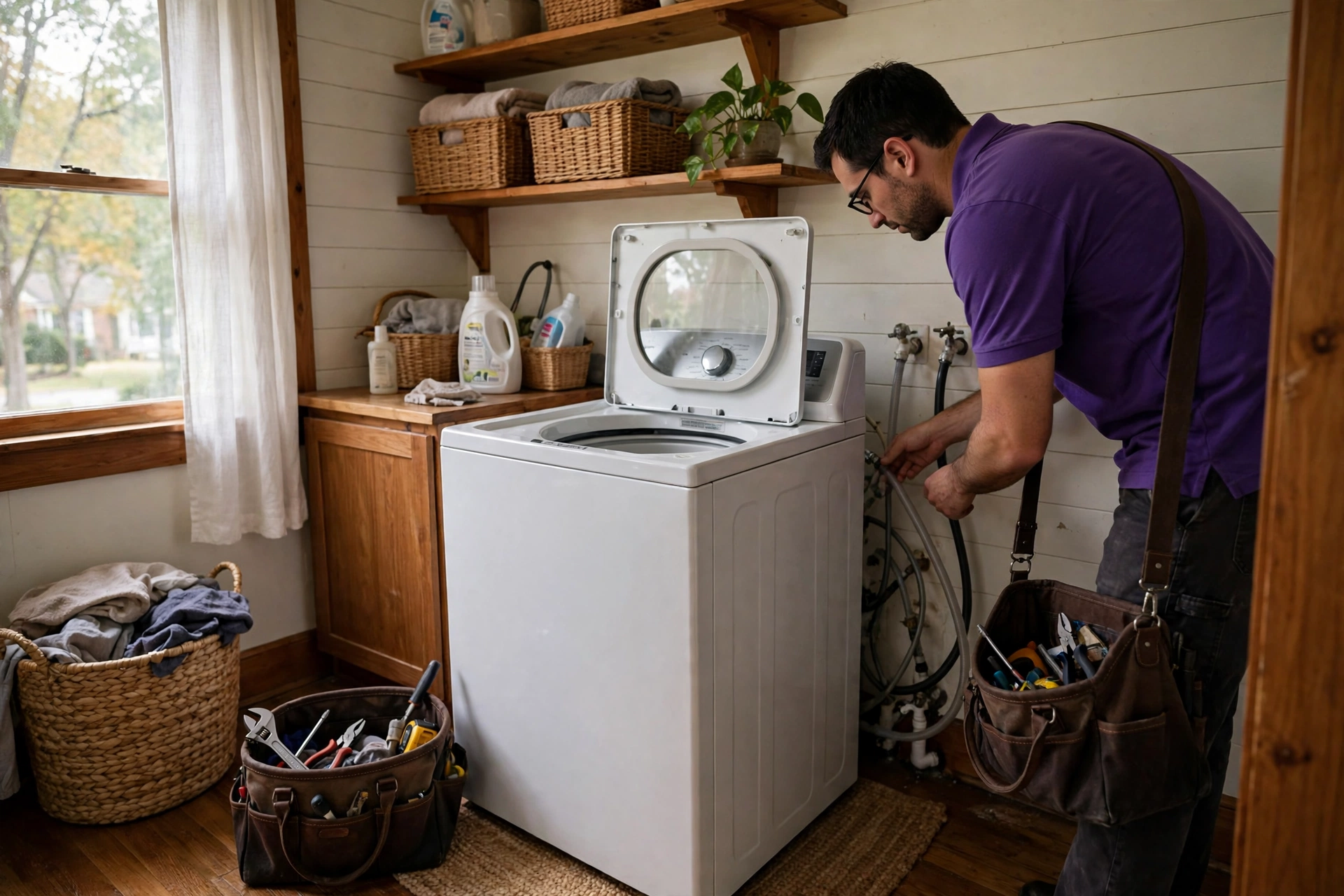
Hyattsville Appliance Repair Co handles Washer Repair in Hyattsville, Maryland. A diagnostic visit confirms what failed, one written figure prices the fix, and work starts on your word.
Hyattsville, Maryland
Hyattsville Appliance Repair Co handles Washer Repair in Hyattsville, Maryland. A diagnostic visit confirms what failed, one written figure prices the fix, and work starts on your word.
Hyattsville Appliance Repair Co does washer repair the slow way on purpose: test, document, quote in writing, then repair, so the figure you approve is the figure you pay.
Laundry is the urgency driver in most houses: a dead washer with a full hamper cannot wait a week. We repair top load and front load washers, the agitator and impeller generations alike, and we test the finished machine with a real load before we call it done. Hyattsville households tend to discover washer trouble in batches: after storms, during heat waves, and in the first cold week, when machines that were quietly aging all decide together.
The Hyattsville housing stock shapes the work. Hyattsville mixes historic district bungalows and rowhouses near the Arts District with mid century neighborhoods toward University Park and Chillum, a housing stock whose kitchens range from carefully preserved to fully renovated. Add summer storm flickers, mineral heavy water, and the reality that most households run their appliances hardest at the same hours, and the local fault patterns become predictable in the best way: we arrive already suspecting the right things.
Standing water and a humming pump is the most common washer call in the trade: a failed pump, or something small and cloth stopping it cold. Machines that drain but refuse to spin are often protecting themselves: an unbalanced load sensor, a worn shift actuator, or a lid switch that no longer reports closed. When cycles run long and clothes come out soaked, drainage is partially blocked more often than the pump has fully failed. Hyattsville's historic bungalows and rowhouses hide a century of appliance generations, and diagnosis here starts with the building.
Walking machines and violent shaking come from worn suspension rods or dampers, a repair that restores the machine instead of replacing it. When a front loader roars in the spin, the rear bearing is the prime suspect, and it is the washer fault where age and cost argue the hardest about repair. When a washer leaks tells us where to look: fill leaks are hoses and valves, wash leaks are seals, and drain leaks are the pump circuit. University Park and Riverdale Park owners repair first as a matter of local culture.
No fill calls start at the screens and the valve: sediment does slow damage, and the valve itself is a wear part with a finite life. A machine that will not start is a lock, a switch, or a board, in that order of likelihood and price, and we test in that order. Front load odor is a maintenance fault with a mechanical edge: a drain pump filter that has never been cleaned and a gasket fold that never dries. Arts District kitchens run small and hard, and their machines are judged by use, not by address.
We pull the fault codes, run a manual test cycle, and meter the suspect parts, so the quote names a tested component rather than the whole system the code complains about. The visit record stays with the Hyattsville household, readings and part numbers included.
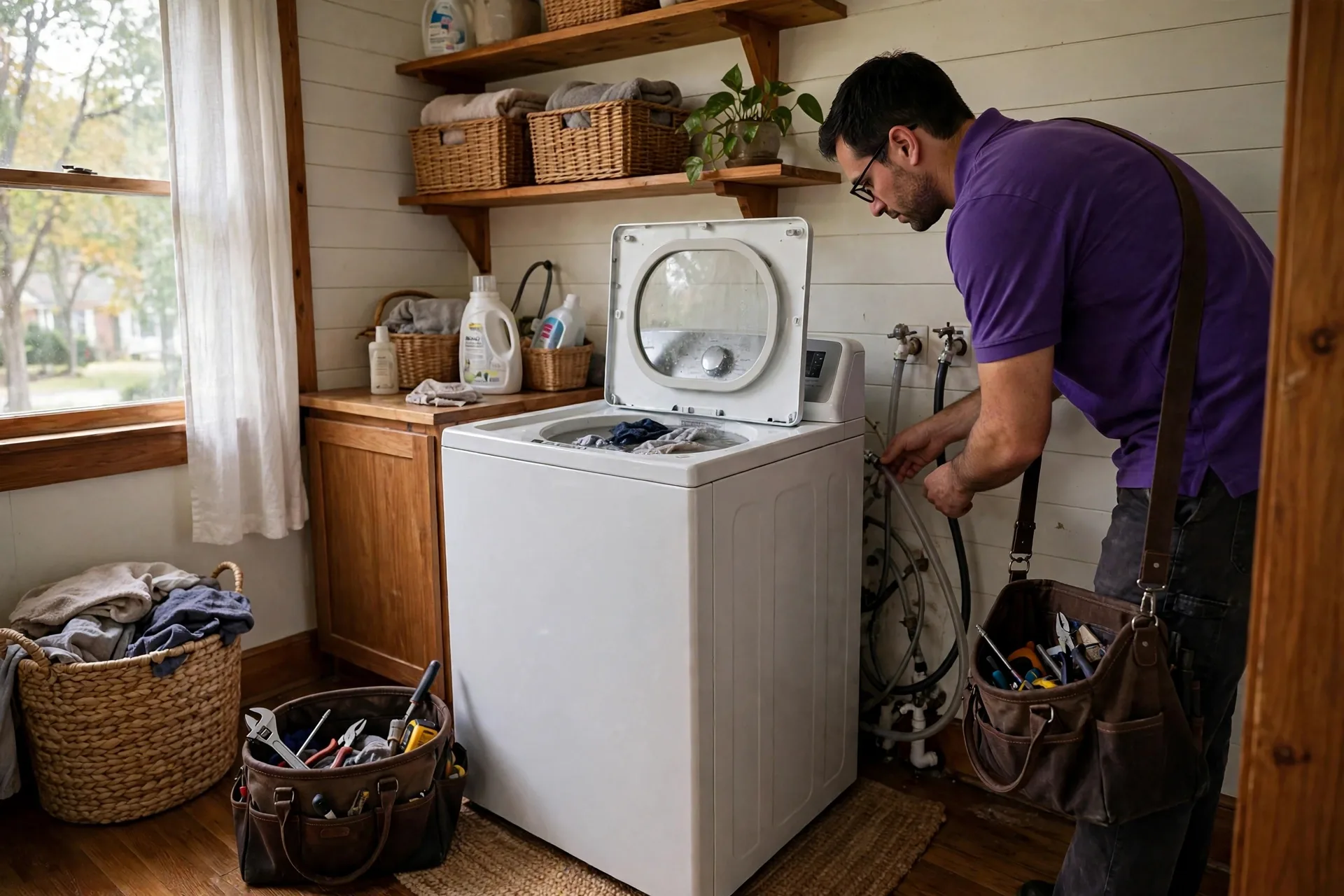
A call from Edmonston: Washer refusing to fill on a well water supply. Testing found inlet screens packed with sediment and a weak inlet valve. We fitted a new valve, flushed the screens, and verified fill rates on both temperatures. Hard water in this part of the county scales elements and valves on a predictable schedule.
What moves the figure is the depth of the machine the part lives in: a pump is an hour at the bottom panel, while a tub bearing is the machine in pieces on the floor. There are no parts ordered on a hunch: the figure follows the diagnosis, in writing, and it holds for the work described. Every repair here is proven running its real work before the visit closes.
Our rule in laundry is find the first domino. Most washer symptoms are two or three parts deep in a chain, and the repair belongs at the start of the chain, not the end. Every job on this page ends with the appliance run through its work in front of us. A repair that has not performed is a theory, and we do not leave theories running in your kitchen. Basement laundry in Hyattsville's older housing lives damp, and the diagnosis starts from that fact.
Tell us what the washer is doing, or not doing, on the form and we will take it from there: diagnosis first, one written figure, and the repair done properly.
The drain pump has failed or something is lodged in the pump or trap — a coin, a sock, a bra underwire. It is the single most common washer repair and usually a one visit fix once the water is managed. Hyattsville's historic bungalows and rowhouses hide a century of appliance generations, and diagnosis here starts with the building.
It depends on the noise. Suspension and damper noise is a good repair at almost any age. Rear tub bearing noise is the expensive one; on an older machine we will show you the figures both ways and let the math decide. Chillum and Adelphi garden apartments route turnover work through written diagnoses as standard practice.
The smell is a water problem: residue in the door gasket and a pump filter that has never been serviced. Cleaning both, plus a drain check, ends it in most houses. The visit record stays with the Hyattsville household, readings and part numbers included.
Published guides put a diagnostic visit at $75 to $125, usually credited toward the repair. For a washer that includes running the machine, reading its codes, and testing the suspect parts under load. Mount Rainier and Brentwood landlords get per unit findings they can file, not verbal summaries.
Shaking is suspension until proven otherwise: rods, dampers, or a leveling problem. All are serviceable, and the test is a full spin with a wet load before we leave. Arts District kitchens run small and hard, and their machines are judged by use, not by address.
Most common repairs, pumps, switches, valves, actuators, finish in one visit of about an hour once the part is in hand. Bearing and transmission work is a half day class of job and is quoted as such. Storm season flickers along the Route 1 corridor are written into control boards across whole blocks.
The form asks for the six things a booking needs: your name, phone, email, service address, repair or install, and your notes on the machine. Send it and we answer with the relevant price band and the scheduling options for a diagnostic visit.
Prefer to talk it through first? Send the form and we will call you back at the number you give us.